Walk into any seed catalog and you will find over a thousand tomato varieties staring back at you. Red ones, black ones, striped ones. Tomatoes the size of a marble and tomatoes the size of your fist.
It is completely overwhelming. And it does not need to be.
Here is the truth: every tomato on earth sorts into a handful of types, and once you know them, choosing gets easy. This guide gives you the whole map.
The Short Version
All tomatoes sort along three lines:
- How the plant grows: determinate (bush) or indeterminate (vine)
- How the seed came to be: hybrid or heirloom
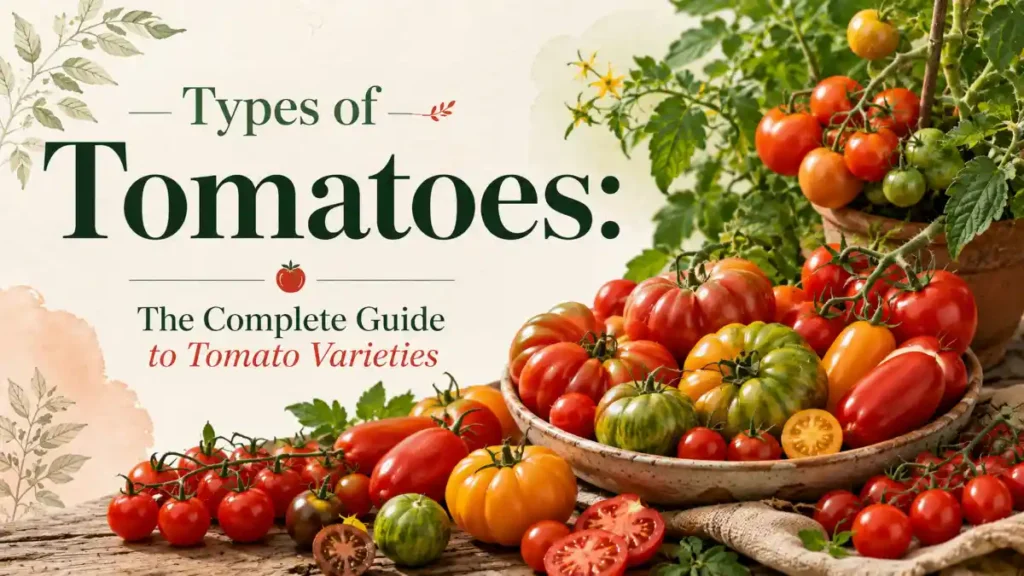
- The fruit itself: cherry, grape, cocktail, plum, slicer, beefsteak, or oxheart
Pick one answer from each line and you have described nearly any tomato ever grown. Let’s unpack them.
Determinate vs Indeterminate Tomatoes
This is the first question that matters, because it decides how much space and effort a plant needs.
Determinate tomatoes grow like a bush. They stop at 3 to 4 feet, set almost all their fruit in one big wave over a few weeks, then slow down. That makes them ideal for containers, small gardens, and canning, where one big harvest is exactly what you want.
Indeterminate tomatoes grow like a vine, and they simply do not stop. Six feet, eight feet, more if you let them. They produce steadily from midsummer until frost, which means fresh tomatoes every week instead of one flood.
Neither is better. A patio grower wants determinate. A family that eats tomatoes daily wants indeterminate. Most gardens are happiest with some of each. And because the labels lie more often than you would expect, we wrote a full determinate vs indeterminate guide that names names.
Heirloom vs Hybrid Tomatoes
This one causes more arguments than it should.
Heirloom tomatoes are old varieties, passed down for generations and bred true, meaning you can save the seeds and grow the same tomato next year. They carry the wild colors, odd shapes, and legendary flavors. Brandywine has been amazing people since the 1880s.
Hybrid tomatoes are deliberate crosses between two parent varieties, bred for traits like disease resistance, uniformity, and yield. Celebrity and Sungold are hybrids, and they are two of the most beloved tomatoes in the world.
The honest take? Heirlooms tend to win on flavor and story. Hybrids tend to win on reliability and sheer output. Grow both and let your taste buds vote. Just know that hybrid seeds will not grow true next year, so seed savers should stick with heirlooms.
The 7 Main Types of Tomatoes
1. Cherry Tomatoes
Small, round, and dangerously snackable. Cherry tomatoes run about an inch across, ripen fast, produce like crazy, and forgive almost every beginner mistake. Sweetness is their superpower: Sungold tastes like candy, and Super Sweet 100 earns its name with hundreds of fruits per plant. If you grow one tomato in your life, make it a cherry.
2. Grape Tomatoes
The oblong little ones that fill grocery store clamshells. Grape tomatoes are firmer and meatier than cherries with thicker skins, which is why they travel well and keep longer. Less juicy burst, more satisfying chew. Juliet is the garden favorite here, a workhorse that shrugs off cracking. Torn between the two little ones? The cherry vs grape comparison settles it trait by trait.
3. Cocktail Tomatoes
The in-between size, roughly a golf ball, often sold still attached to the vine. Campari is the famous one, prized for balanced sweetness and acidity. Big enough to slice for a sandwich, small enough to eat whole. Criminally underrated for home growing.
4. Plum and Paste Tomatoes
Egg shaped, dense, few seeds, low water content. These are built for cooking: they reduce into thick sauce without hours of simmering. Roma is the classic, San Marzano is the legend (the real ones grow in volcanic soil near Naples, but the variety grows fine in a backyard), and heirloom Amish Paste is meaty enough to eat fresh too. If sauce or canning is your goal, this is your type.
5. Slicing Tomatoes
The everyday round tomato, about the size of a tennis ball, juicy with classic flavor. This is the burger tomato, the salad tomato, the BLT tomato. Reliable favorites include Celebrity, Early Girl, and Better Boy, all bred to produce heavily and resist disease.
6. Beefsteak Tomatoes
The giants. Half a pound is normal, one pound is common, and record chasers grow them past three. Dense, meaty interiors where one slice covers the whole sandwich. They take longer to ripen (80 to 90 days) and appreciate a strong trellis, but the payoff is the best tomato eating there is. Brandywine, Cherokee Purple, and Mortgage Lifter are the names to know.
7. Oxheart Tomatoes
The heart shaped heirlooms most people have never tried. Oxhearts combine beefsteak size with paste tomato density, which makes them stunning for both slicing and sauce. They look wrinkled and strange and taste incredible. Seek out German Red Strawberry or Hungarian Heart and surprise somebody.
Tomato Colors (and What They Tell You)
Color in tomatoes is not decoration. It signals flavor chemistry.
- Red: the classic balance of sweet and tart, powered by lycopene
- Yellow and orange: milder, lower acid taste, often fruity. Great for people who find red tomatoes too sharp
- Purple and black: deep, smoky, complex. Cherokee Purple and Black Krim are the gateway drugs. True indigo varieties like Indigo Rose get their color from anthocyanins, the same pigment as blueberries
- Green when ripe: yes, ripe green tomatoes exist. Green Zebra is zingy and bright, and confuses everyone at the table in the best way
- White and pale yellow: the mildest, sweetest, least acidic tomatoes of all
- Striped: usually a flavor blend of their parent colors, always the prettiest plate
How to Choose Your Tomato
Match the tomato to the job and you cannot go wrong:
- Snacking and salads: cherry, grape, or cocktail
- Sandwiches and burgers: slicers and beefsteaks
- Sauce and canning: plum, paste, or oxheart
- Small spaces and pots: determinate and dwarf varieties
- Short or cool summers: early ripeners like Glacier and Early Girl
- Brutal heat: heat setters like Heatmaster and Phoenix
- Maximum flavor, patience required: big heirlooms like Brandywine
Want it decided for you? Answer three questions in our Variety Finder tool and it matches you with varieties that fit your space, climate, and taste. Then check how many plants fit your bed and when to plant them.
Tomato Variety FAQ
How many tomato varieties are there?
More than 10,000 known varieties worldwide, with estimates running higher once you count regional strains. Nobody has an exact number, which tells you everything about how much humans love this fruit.
What is the sweetest tomato variety?
Among widely grown varieties, Sungold takes the crown, with Sweet Million and Sun Sugar close behind. Small tomatoes concentrate sugar, which is why cherries dominate the sweetness rankings.
What is the best tomato variety for beginners?
A cherry tomato, ideally Sungold or Super Sweet 100, or the slicer Celebrity if you want size. All three are vigorous, disease resistant, and productive even when you get things wrong.
What is the difference between Roma and San Marzano?
Both are paste types, but San Marzano fruits are longer, thinner walled, and widely considered deeper in flavor, while Roma is more compact, more disease resistant, and easier to grow. Sauce purists plant San Marzano; pragmatists plant Roma; smart gardeners plant both.
Are heirloom tomatoes harder to grow?
A little. Most heirlooms lack the disease resistance bred into modern hybrids, so they ask for better airflow, mulching, and crop rotation. The flavor premium is worth the extra attention. If resistance matters most in your garden, our roundup of disease resistant tomatoes reads the actual trial data.
What are currant tomatoes?
The tiniest tomatoes of all, pea sized fruits from a wild cousin of the garden tomato. Hundreds per plant, intense flavor, and a conversation starter in any salad.
Explore the Variety Guides
Each branch of the tomato family tree has its own field guide: the cherry and grape lineup, beefsteaks and slicers, sauce and paste types, and the heirloom collection. Curious about the rainbow? What every tomato color means settles it, and if you just want a shortlist for spring, start with the best tomatoes to grow. One more for the road: that green husked thing at the market is not a tomato at all, and tomatillo vs tomato explains why.
Where to Go from Here
Now you know the map: growth habit, seed heritage, and the seven fruit types that cover everything from currant to beefsteak.
Our variety library is being built one deep profile at a time, covering taste, growth habit, days to maturity, and disease resistance for every tomato worth growing. Meanwhile, the Variety Finder will point you to your match, and the growing section takes over from there.
Pick your tomato. Plant it well. Argue about heirlooms at dinner parties. That is the whole hobby.