
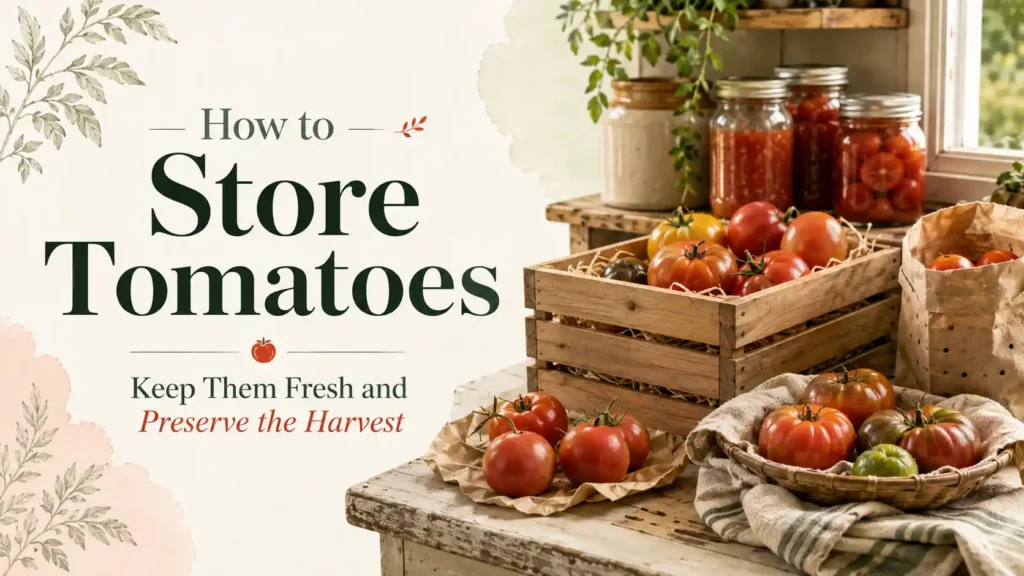
Every summer the same thing happens. You grow more tomatoes than any human could eat, or you cave at the farmers market and come home with a heaping basket. Then they all seem to ripen on the exact same Tuesday.
So how do you keep them from turning to mush before you get to them? And what do you do with the pile you cannot possibly finish? That is what this guide is for. I will show you how to store fresh tomatoes so they actually taste good, and then how to save the extras for the middle of winter, when a homegrown tomato feels like treasure.
The One Rule: Keep Ripe Tomatoes Out of the Fridge
If you remember nothing else, remember this. The refrigerator is where good tomato flavor goes to die.
Tomatoes hate the cold. Once the temperature drops below about 55 degrees, something sad happens inside them. The cold shuts down the aroma compounds that give a tomato its smell and taste, and it stops the plant from turning starches into sugar. It also breaks down the cell walls, which is why a fridge tomato turns mealy and grainy. Researchers have watched this happen even at 50 degrees, where the tomato looks fine on the outside but has quietly gone dull on the inside.
That is the whole reason grocery store tomatoes taste like wet cardboard. They spend days in cold storage before they ever reach you. So the counter, not the fridge, is a ripe tomato’s happy place.
How to Store Fresh Tomatoes the Right Way
Storing ripe tomatoes well is almost embarrassingly simple. Here is the whole system.
Leave them on the counter, out of direct sun. A bright shaded spot is perfect. Direct sunlight does not ripen them evenly, it just cooks and softens them.
Set them in a single layer, not a pile. The shoulders of a tomato are the softest part, and stacking them bruises the ones on the bottom. One bruised tomato spoils fast and takes its neighbors down with it.
Point the stem scar down. Resting them stem side down helps seal in moisture and keeps air out, so they stay firm a little longer.
Do not wash them until you are ready to eat. That extra moisture on the skin just invites mold.
Stored this way, a ripe tomato is at its best for about three to five days. For exactly how long every kind of tomato lasts, fresh or canned or cooked, run it through our tomato shelf life tool.
The one time the fridge is okay
Here is the honest exception. If a tomato is dead ripe and you simply cannot eat it in time, the fridge is the lesser evil. A few days of cold is better than throwing it in the compost. Just do one thing: pull it out and let it come back to room temperature for a while before you eat it. Warming it up brings back some of the aroma the cold put to sleep. So chill only fully ripe tomatoes, only when you must, and always warm them up again.
How to Ripen Green Tomatoes Indoors
Picked some tomatoes too early, or beating a frost? Green tomatoes ripen beautifully off the vine, as long as they have reached full size first. Small, hard, immature ones will never turn, so save those for frying or pickling.
For the rest, use the ethylene trick. Ethylene is the natural gas that ripens fruit, and you can borrow some.
The fast way: Put your green tomatoes in a paper bag or a box with a ripe banana or apple, and leave it at room temperature. The banana pumps out ethylene and the tomatoes ripen in days. Check daily and pull any that are ready.
The slow way: Wrap each tomato loosely in newspaper, set them in a single layer in a box, and stash it somewhere cool and dark. They will ripen over a few weeks, giving you fresh tomatoes long after the plants are gone.
Skip the old advice about a sunny windowsill. The sun makes them soft, not red. Ripening is about warmth and ethylene, not light. Our when to pick tomatoes guide shows exactly which stage is safe to pull off the vine.
Preserving a Tomato Glut: Your Four Options
When the harvest truly buries you, it is time to preserve. You have four solid ways to bottle up summer, from dead easy to a proper project.
Freezing (the lazy person’s hero)
Freezing is the easiest preservation there is, and it is my go to. Best part: you do not have to peel or blanch anything first.
Just wash and dry your tomatoes, cut out the core if you like, and freeze them whole on a tray. Once solid, tip them into a freezer bag. Here is the magic: when you run a frozen tomato under warm water, the skin slips right off in your hand. No fussy peeling required.
The catch is that thawed tomatoes turn soft and watery, so they are strictly for cooking, not for slicing into a salad. Drop them straight into sauces, soups, chili, and stews all winter. Frozen tomatoes keep their quality for about eight to twelve months. You can also cook a big batch of sauce and freeze it in meal size portions. Learn the details in our freezing tomatoes guides.
Canning (the pantry filler)
Canning gives you shelf stable jars that last for a year or more, but tomatoes come with one safety rule you absolutely cannot skip.
You must add acid to every jar. Tomatoes sit right on the border between acidic and low acid foods, and many modern varieties are not quite acidic enough to can safely on their own. Without extra acid, you risk botulism, which is as dangerous as it sounds. The fix is simple and cheap.
Per quart jar, add 2 tablespoons of bottled lemon juice or half a teaspoon of citric acid. Per pint jar, add 1 tablespoon of bottled lemon juice or a quarter teaspoon of citric acid. Use bottled lemon juice, not fresh, because bottled has a reliable, consistent acidity. This step is required whether you use a boiling water bath or a pressure canner, no exceptions. If the tartness bothers you, stir in a little sugar to balance it, which does not affect safety at all.
Because the safe processing times matter so much, always follow a tested recipe from a trusted source like the National Center for Home Food Preservation or the Ball canning guides, and never can tomatoes from dead or frost killed vines. Our canning tomatoes guides walk you through it safely, and the meaty paste varieties like Roma and San Marzano are the ones you want in the jar.
Drying (the flavor bomb)
Drying concentrates a tomato into a chewy, intense little bite of pure flavor. Paste types work best here since they hold less water.
Slice them, lay them on a rack, and dry them low and slow in a dehydrator or in your oven on its lowest setting with the door cracked, until they are leathery. In a hot, dry climate you can even sun dry them the old fashioned way. Store fully dried tomatoes in an airtight jar. If you pack them in oil instead, keep that jar in the fridge and use it within a couple of weeks, since oil and low acid foods can be risky at room temperature.
Making sauce and paste
You can also cook your harvest down into sauce, paste, or salsa first, then either freeze it or can it using the acid rule above. It is a great way to shrink a mountain of tomatoes into a few tidy jars. Need to scale a recipe up or down? Our tomato conversion calculator does the math.
Tomato Storage FAQ
Should you store tomatoes in the fridge or on the counter?
The counter, almost always. Cold below 55 degrees kills flavor and turns tomatoes mealy. Only refrigerate a fully ripe tomato you cannot eat in time, and let it warm back up before eating.
Should tomatoes be stored stem up or stem down?
Stem side down for ripe tomatoes. It helps seal in moisture and keep air out, so they stay firm a little longer. Just as important, store them in a single layer so they do not bruise.
Why do my tomatoes get mealy?
Almost always the cold. Refrigeration breaks down the cell walls and creates that grainy, mealy texture. Keeping them at room temperature prevents it.
Can you freeze tomatoes whole?
Yes, and it is the easiest method going. Freeze them whole and raw with no blanching, then slip the skins off under warm water later. Use them for cooking, since they get too soft for fresh eating.
Do green tomatoes ripen off the vine?
Full size green tomatoes do. Put them in a paper bag with a ripe banana at room temperature and they ripen in days. Small, immature green ones will not ripen, so fry or pickle those.
Do you have to add lemon juice when canning tomatoes?
Yes. Add 2 tablespoons of bottled lemon juice per quart, or 1 tablespoon per pint, to make sure the jars are acidic enough to be safe. It is required for both water bath and pressure canning.
The Storage Library
Every method above has a full guide behind it. Settle the fridge debate in the refrigeration answer, turn green fruit red with the ripening guide, and check any timeline in the shelf life reference. When the harvest floods in, choose your preservation path: the freezer shortcut, safe home canning, or drying and dehydrating.
Never Waste a Tomato Again
That is the whole playbook. Keep ripe tomatoes on the counter and out of the fridge, ripen the green ones in a paper bag, and when the harvest overwhelms you, freeze, can, or dry the extras. Do that and you will be eating the taste of summer in the dead of winter.
Grew all these tomatoes yourself? Keep the good times rolling with our growing tomatoes guides, and if you are still deciding what to plant for the best sauce and canning, our tomato varieties guides will point you to the right ones.