
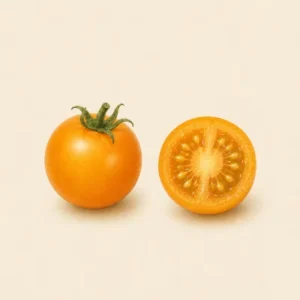
Sungold Tomato
The cult-favorite orange cherry: an F1 hybrid famous for an intensely sweet, fruity, tropical flavor and huge yields that make it the top pick for many gardeners.
Flavor & performance
The honest verdict
What's great
- Legendary intensely sweet, fruity-tropical flavor
- Extremely high yield over a long season
- Early to ripen — among the first cherries of summer
- Vigorous and easy to grow
- Bright orange color brightens salads and snacking
Watch out for
- F1 hybrid — saved seed won't grow true
- Prone to cracking, especially after rain
- Thin skin, short shelf life once picked
- Tall, vigorous vine needs sturdy support
- Dead-ripe fruit can drop or split
Grow it in your zone
| Trait | Sungold Tomato | Sweet 100 | Sun Sugar |
|---|---|---|---|
| Color | Orange | Red | Orange |
| Flavor | Intensely sweet, tropical | Sweet, classic red | Sweet, cleaner, less complex |
| Days | 57–65 | 60–65 | ~62 |
| Cracking | Prone | Moderate | Less prone |
| Habit | Indeterminate | Indeterminate | Indeterminate |
| Type | F1 hybrid | F1 hybrid | F1 hybrid |
| Best for | Fresh snacking | Fresh snacking | Fresh snacking |
The tomato that ruins other tomatoes
I’ll say it plainly. Sungold is the best tasting cherry tomato most people will ever grow, and it isn’t a close race.
The flavor is intensely sweet with a fruity, almost tropical edge that no red cherry matches. People describe mango, apricot, citrus. Whatever you call it, it doesn’t taste like a normal tomato, and that’s the point.
This is the variety that converts tomato skeptics. Kids who “hate tomatoes” eat these off the vine like candy. I’ve heard more than one gardener call it the gateway tomato, and they’re right.
But Sungold has a dark side, and almost nobody selling you seeds talks about it honestly. The fruit cracks. A lot. And the fix isn’t a product, it’s technique.
This guide covers both halves: why this tomato earns its cult following, and how to actually manage its one big flaw.
Where Sungold came from
Sungold is a modern F1 hybrid from Tokita Seed, one of Japan’s old family seed houses. It reached Western gardeners in 1992 and spread on pure word of mouth.
Here’s the part I love. Japanese breeders were chasing the sweet, low acid flavor Japanese consumers prefer in tomatoes. Western markets mostly shrugged at those varieties, but this one orange cherry hit different, and it went on to conquer gardens across America and Britain.
Because it’s a hybrid, its exact parentage stays a trade secret, and seed you save won’t grow true. More on that later, because what happens when you try is genuinely interesting.
What the flavor actually is (and how to keep it)
Sungold runs far sweeter than a standard cherry, with sugar levels rivaling some fruit. But sweetness alone isn’t the magic. There’s a bright, fruity aroma over the top that makes it taste tropical instead of just sugary.
Two things most guides never tell you about that flavor.
First, water dilutes it. Growers notice the taste flattens in rainy stretches and after heavy irrigation. That’s real, not imagination. Sugar concentration drops when fruit swells with water. Once plants are established and fruiting, keeping the watering moderate and even makes the flavor noticeably more intense.
Second, the flavor doesn’t keep. Sungold is at its absolute peak eaten within a day or two of picking, ideally still warm from the sun. It’s not a storage tomato and it’s a poor traveler, which is exactly why the ones in supermarket clamshells never taste like the ones off your vine.
Use it fresh, full stop. Salads, skewers, snacking, or roasted fast in a hot pan until it blisters. Cooking it into sauce wastes everything special about it.
The cracking problem, explained honestly
Every Sungold grower learns this the hard way. The fruit splits, sometimes half the truss after one storm.
Here’s what’s actually happening. University extension research on fruit cracking points at one main driver: rapid water uptake after a dry spell. The plant drinks fast, the fruit swells fast, and the skin can’t stretch fast enough.
Now add Sungold’s specifics. The skin is unusually thin, which is partly why the eating experience is so good. And the fruit is loaded with sugar, which pulls water in even harder. Great flavor and cracking are two sides of the same trait. You can’t breed one away without dulling the other, which is why the crack resistant orange cherries never quite taste like this.
So you manage it instead:
Pick at first full orange. This is the single best trick, straight from growers who’ve fought this for years. Don’t wait for the deep, rich orange. The moment fruit turns fully orange, take it. It finishes on the counter overnight and loses nothing. Fruit left for that last “perfect” day is exactly the fruit that splits.
Pick before rain. Storm coming? Strip every fruit that’s even close. A slightly early Sungold on the counter beats a perfect one split on the vine.
Keep moisture boring. Even watering is the long game. A soaker hose or drip line plus a few inches of straw mulch smooths out the swings between dry and soaked that cause the damage.
Pick daily in peak season. A producing Sungold makes fruit faster than you’d believe. Daily picking keeps ripe fruit off the vine during the exact window it’s most likely to split.
And when some still crack, because some will, eat them that day or roast them. Cracked fruit is fine food and terrible storage.
How to grow the Sungold Tomato, start to finish
Good news: aside from the cracking management, this is one of the easiest, most vigorous tomatoes you can grow.
Starting seeds
Start indoors 6 to 8 weeks before your last frost, a quarter inch deep in a fine seed starting mix. Keep the tray warm, around 70 to 80°F, and expect fast germination, often under a week.
Give seedlings strong light from day one. Sungold seedlings are vigorous and stretch quickly in dim light.
Transplanting
Set plants out once frost is done and nights hold above 50°F. Harden them off for a week first.
Plant deep, burying half to two thirds of the stem after stripping the lower leaves. Buried stem grows roots, and this vine will use every root you give it.
Space plants 24 to 36 inches apart. And honestly, one or two plants is enough for most households. I mean that as a warning.
Soil, light, and water
Rich, well drained soil with plenty of compost, pH around 6.2 to 6.8. Full sun, 6 to 8 hours minimum.
Water deeply and evenly at the base, roughly 1 to 2 inches a week, then ease off slightly once fruit is coloring. Remember the two Sungold rules: even moisture prevents cracking, and restrained moisture concentrates flavor. Drip plus mulch handles both without daily thought.
Our complete guide to growing tomatoes covers the fundamentals in full.
Feeding
Mix a balanced organic fertilizer into the planting hole. When flowers appear, switch to a lower nitrogen tomato feed and repeat every 3 to 4 weeks.
Go easy. An overfed Sungold builds a magnificent green monster with fewer trusses, and it didn’t need the encouragement.
Support: plan for a monster
Catalogs say 6 feet. Growers know better. A happy Sungold in good soil blows past 8 feet and keeps going, and I’ve seen credible reports well beyond 10.
A standard ring cage is a joke here. Use a tall, heavy duty cage, a sturdy 8 foot stake, or a string trellis you can keep extending. Tie the leaders loosely as they climb.
When the vine hits the top of whatever you gave it, you have two choices: let it flop over and sprawl, or pinch the growing tips and cap the height. Both work. Deciding before August works best.
Pruning
Optional, but useful for this variety. Left alone, Sungold becomes a thicket. Training it to two or three main stems and pinching extra suckers keeps the plant pickable, and picking access genuinely matters when daily harvest is your anti cracking strategy.
Don’t strip it bare. Leaves shade fruit and feed flavor.
Grower's Picks for Sungold
The gear that matters most for growing Sungold well, so you can buy the right thing once.
The problems Sungold actually gets
Cracking. Covered above. It’s problem one, two, and three.
Birds and critters. Bright orange fruit at eye level is a beacon. If birds find the plant, a length of bird netting over the support ends the argument. Chipmunks and squirrels are harder; picking at first orange helps here too, since dead ripe fruit is what they want.
Hornworms. Same as any tomato. Check stems when you see stripped leaves, handpick, done.
Disease. Sungold carries tolerance to fusarium wilt and tobacco mosaic virus, which is more protection than most heirloom cherries offer. It’s not immune to the leaf spot diseases, so water at the base, mulch, and give it airflow. Our tomato fruit problem guide sorts the harmless quirks from the real trouble.
Flavor fade in storage. Not a disease, but it disappoints people, so I’m listing it. Eat them fresh. Stop refrigerating them.
Harvest rhythm
First ripe fruit comes fast, around 55 to 65 days from transplant, earlier than almost any full flavored tomato. Then it simply doesn’t stop until frost.
Expect long trusses that ripen sequentially, a few fruit at a time, every single day. Peak season, a single plant can hand you a bowl a day. Pick at first full orange, pick daily, and keep a bowl on the counter instead of the fridge.
If frost threatens, strip everything showing any color. Sungold ripens indoors better than most.
Can you save Sungold seeds? The honest answer
Sungold is an F1 hybrid, so saved seed won’t reproduce the variety. Standard advice ends there. But what actually happens if you try is worth knowing, because growers have run the experiment at scale.
Plant enough saved Sungold seed and you get a genetic lottery: most plants throw ordinary orange or even red cherries of varying flavor, with roughly one in ten going red in some grow outs. Occasionally someone gets lucky, and there are documented cases of growers selecting their best plants for four generations running and ending up with a stable, sweet orange cherry they were happy with.
So my take: buy fresh Sungold seed for your reliable crop, always. But if you’ve got spare bed space and curiosity, growing out a few saved seeds is a genuinely fun experiment, and every outcome is still an edible tomato. If you want a sweet cherry that comes true from seed without the gamble, grow an open pollinated type alongside it and save from that instead.
Sungold vs the other sweet cherries
Sun Sugar is the obvious comparison: another orange hybrid cherry, slightly less complex in flavor, but with tougher skin that resists cracking much better. If Sungold’s splitting drives you out, Sun Sugar is the sane trade.
Sweet 100 and its successors bring huge yields of sweet red fruit with a more classic tomato tang. Great cherries, different experience.
My honest ranking for pure eating pleasure: Sungold first, and it’s not close. For growing convenience: the others win. Most serious gardeners I know solve this by planting Sungold plus one backup. Our cherry tomato guide lays out the whole field.
The verdict
Grow Sungold if flavor is the reason you garden. Nothing else in the cherry world matches it, it’s early, it’s absurdly productive, and its disease tolerance makes it easier than most heirlooms.
Accept the terms: the fruit cracks unless you pick early and water evenly, the vine wants 8 feet or more of support, the seed can’t be saved reliably, and the flavor won’t survive a fridge.
Fair trade? I think it’s the best deal in tomatoes. One plant, every year, no debate.