Indigo Rose Tomato
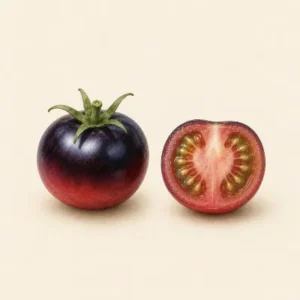
The original blue tomato: a small variety with inky purple black anthocyanin skin over red flesh, bred at Oregon State, best picked fully ripe for its mild, plummy flavor.
Flavor & performance
The honest verdict
What's great
- Dramatic, genuinely purple black skin color
- Anthocyanin pigments a normal tomato lacks
- Open pollinated, so you can save the seed
- Firm skin resists cracking and stores well
- Robust, productive, easy to grow vine
Watch out for
- Mild flavor, milder than the great dark heirlooms
- Dark color hides ripeness, so it is easy to pick too early
- Skin is firm and can feel a little tough
- Small fruit, not a variety for volume
- Color only develops where sunlight hits the fruit
Grow it in your zone
| Trait | Indigo Rose Tomato | Black Cherry | Cherokee Purple |
|---|---|---|---|
| Color | Purple black over red | Purple brown | Dusky rose |
| Flavor | Mild, plummy | Rich, complex | Rich, smoky |
| Fruit size | 1 to 2 oz | 0.5 oz | 8 to 12 oz |
| Days | 75 to 80 | 65 to 75 | 80 to 90 |
| Color source | Skin anthocyanin | Black tomato genes | Black tomato genes |
| Yield | Good | High | Moderate |
| Save seeds | Yes | Yes | Yes |
Every bad review of Indigo Rose traces to the same mistake. People see dark purple skin and think it’s ripe. It’s not.
The purple on this tomato comes from anthocyanins. These are the same pigments found in blueberries and blackberries. They develop in response to sunlight, not ripening. So a fruit can look deeply purple on the vine and still be completely green inside.
This single misunderstanding has split the variety’s reputation down the middle. Growers who picked by color got watery, bland fruit and wrote devastating reviews. But growers who learned the trick reported something completely different. They described rich flavor with a depth they didn’t expect from a small tomato. One called it sweet and tangy with a quality like aged balsamic. Another found a plummy taste with a subtle undertone of smokiness.
Indigo Rose is the first tomato variety in the world bred to contain anthocyanins in its fruit. Professor Jim Myers at Oregon State University spent 10 years developing it through traditional crossbreeding. OSU released the variety in January 2012, and it made international news. However, the real story isn’t the science. It’s the fact that most growers who plant it have no idea when to pick.
Where the purple comes from
Most dark tomatoes get their color from pheophytin. That’s a breakdown product of chlorophyll. Cherokee Purple, Black Krim, and other dusky heirlooms all use this pigment. It creates the brownish purple tones those varieties are known for. Our tomato colors guide explains how different pigments create the full range of tomato colors.
Indigo Rose is fundamentally different. Its purple comes from anthocyanins, the same antioxidant compounds found in blueberries, purple grapes, and blackberries. Oregon State University confirmed this distinction at release. The anthocyanins concentrate in the skin rather than the flesh. Because sunlight triggers their production, fruit with more direct sun develops deeper purple color. Even on a single tomato, the sunny side can turn nearly black while the bottom stays green or red.
The path to this variety started in the 1960s. Two plant breeders, one Bulgarian and one American, crossed cultivated tomatoes with wild species from Chile and the Galapagos Islands. Those crosses entered the USDA seed bank and sat for decades. In the early 2000s, graduate student Carl Jones was sorting through experimental tomato lines at Oregon State University. Among the material, he found a fruit with unusual purple pigmentation in the skin.
Jim Myers recognized the potential. He spent the next 10 years crossing and selecting. The goal was a stable variety that home gardeners could actually grow. No genetic modification was involved at any stage. Since the 2012 release, more than 50 purple tomato varieties have been created using Myers’ germplasm. Five came from his own OSU program, including Indigo Cherry Drops, Indigo Pear Drops, Indigo Kiwi, and Midnight Roma. Over 45 more came from private breeders around the world.
What the fruit is like
Small, round fruit weighing 1 to 2 ounces each. So the size falls between a cherry tomato and a standard cocktail tomato. Where the sun hits the skin, it turns deep purple to nearly black. The shaded side stays green until it ripens to red or orange. Cut one open, and the flesh inside is standard red. So if you’re expecting purple all the way through, you’ll be surprised.
The skin is smooth and glossy but thicker than most varieties. In fact, some growers note a slightly tannic quality to it. This thickness helps the fruit hold on the vine without cracking or dropping. However, it also means the skin has a slight chew when eating fresh.
Indeterminate vines grow 4 to 5 feet tall. So that’s compact for an indeterminate variety. Each truss carries 5 to 8 tomatoes. Days to maturity vary by source. Oregon State University lists 91 days from transplant. Seed companies commonly say 75 to 80 days. In practice, plan for at least 80 days. This is not an early tomato.
How to know when it’s ripe
Forget the usual method of judging ripeness from the top of the fruit. Indigo Rose breaks that rule completely.
The purple develops from sun exposure at any stage of growth. A completely unripe green tomato can have deep purple shoulders if it sits in direct sunlight. So the color on top tells you nothing about whether the fruit is ready to eat.
Instead, flip the fruit and check the bottom. The underside gets less direct sun, so it reveals the actual ripening color beneath the anthocyanin layer. Look for the bottom to shift from green to red or orange. Then squeeze gently. The fruit should give slightly, like a ripe peach.
One experienced grower described the ideal picking stage simply. Wait until the skin has lost most of its purple and turns almost red throughout. At that point, the fruit feels soft to the touch. Before that stage, expect watery flavor and disappointment.
If you pick a firm, deeply purple Indigo Rose and find it bland, you didn’t get a bad variety. You picked too early. Let a few ripen further on the counter, but for the best flavor, let them finish on the vine. This ripeness confusion is the single biggest reason for negative reviews.
The flavor debate
Even among growers who pick at the right stage, flavor opinions split more than on almost any other variety.
So what does each side actually say? The positive camp describes sweetness with complexity. Reviewers mention tangy depth like aged balsamic, a plummy quality, and subtle smokiness. A slight floral note shows up in some descriptions too. Across nearly 30 reviews on one major gardening site, the variety averaged 4.3 out of 5 stars. Several growers called it a top five favorite.
The negative camp finds it unremarkable even when fully ripe. One Connecticut grower called Indigo Rose her most disappointing variety by far. A California grower used the word bland. Meanwhile, a Minnesota reviewer found the texture somewhat watery with frustratingly slow ripening on top of it.
Beyond ripeness timing, growing conditions play a role in the split. Indigo Rose develops more complex flavor with consistent heat and full sun. Cool, cloudy seasons produce blander fruit. If you try this variety, give it your warmest, sunniest spot. Then let the fruit hang until it’s truly soft before picking.
How to grow Indigo Rose, start to finish
Starting seeds
Start indoors 6 to 8 weeks before your last frost date. Sow seeds a quarter inch deep in clean seed starting mix. Keep the soil temperature between 70 and 80°F for germination. A heat mat makes this consistent.
Important note on germination. Multiple growers report lower rates with Indigo Rose than with standard varieties. Sow more seeds than you think you need. Most tomatoes sprout in 5 to 7 days, but Indigo Rose can take 10 to 14 days. Some growers recommend soaking seeds overnight before planting to improve the rate.
Next, set up fluorescent or LED grow lights 2 to 3 inches above the seedlings once they emerge. Pot up to individual containers when the first true leaves appear. After that, feed weekly at half strength with a balanced liquid fertilizer.
Because Indigo Rose is open pollinated, you can save seeds from ripe fruit for the following season. Keeping your own proven seed stock over time often gives better germination than buying new each year.
Transplanting
Move plants outside after your last frost date passes. Wait until nights hold above 50°F. Harden off over 7 to 10 days first by setting plants outside for increasing periods each day.
Bury two thirds of the stem at planting. Strip any leaves that would go below soil level. Tomatoes root along buried stem sections, so deeper planting builds a stronger foundation for the season ahead.
Space plants 24 to 30 inches apart. Even though Indigo Rose grows more compact than most indeterminate varieties, crowding still hurts airflow. Still, adequate spacing keeps air moving through the foliage and reduces disease pressure on the lower canopy.
Soil and feeding
Rich, well drained soil with plenty of compost worked in. Also target a pH of 6.0 to 6.8. Mix a balanced organic fertilizer into the planting hole before setting the transplant. This slow release base feeds roots through the first weeks of establishment.
Switch to a lower nitrogen tomato feed once the first flowers open. High nitrogen after flowering pushes leaf growth at the expense of fruit set. Then feed every two weeks through the full season.
Because Indigo Rose is a compact plant with moderate yields, it needs less total nutrition than large beefsteak varieties. Consistent moderate feeding works better than heavy doses spaced far apart.
Light and water
Full sun, at least 6 to 8 hours daily. This matters more for Indigo Rose than for most varieties. Sunlight drives anthocyanin production in the skin. More sun means deeper purple color and potentially higher antioxidant content.
Even so, the variety also shows strong heat and drought tolerance once established. Several growers in hot climates noted that Indigo Rose handled extreme heat better than other varieties planted nearby. So if you grow in a warm region, this variety can take it.
Water deeply at the base of the plant. Target 1 to 2 inches per week. A drip line or soaker hose delivers water evenly without wetting the foliage. Lay 2 to 3 inches of straw mulch around each plant to stabilize soil moisture between waterings.
Support and pruning
Even though the vine tops out at 4 to 5 feet, it still benefits from support. Use a sturdy cage or stake system set at planting before the roots spread.
Indigo Rose requires less pruning than most indeterminate varieties. The compact habit produces fewer aggressive suckers. Remove suckers below the first flower cluster to open the lower canopy. Above that point, let the plant develop its natural shape.
Strip any foliage that touches the ground. Even with disease tolerance, soil contact still invites fungal problems that spread upward through the canopy over time.
Grower's Picks for Indigo Rose
The gear that matters most for growing Indigo Rose well, so you can buy the right thing once.
Problems to watch
Slow ripening. At 80 to 91 days from transplant, Indigo Rose takes longer than most cherry varieties. In cooler climates, fruit may not ripen before fall frost arrives. If your season runs short, start seeds earlier and consider season extension methods like row covers. Our tomato fruit problem guide covers ripening challenges in more detail.
Ripeness confusion. Covered above, but worth repeating. Purple does not mean ripe. Check the bottom color and squeeze gently. Pick only when the underside turns red or orange and the fruit gives to light pressure.
Poor germination. Multiple growers report lower germination rates than standard varieties. Sow extra seeds to compensate. Consider soaking seeds overnight before planting. Also keep soil temperature consistent with a heat mat during the germination window.
Cracking. The thick skin resists cracking better than many varieties. Still, heavy rain after a dry stretch can split the fruit. Consistent watering and straw mulch reduce this risk significantly.
Lower yield. Oregon State University tested Indigo Rose against other varieties and found yields significantly lower than mainstream tomatoes like Early Girl. This is not a production variety. Expect moderate harvests from each plant. If volume matters to you, pair Indigo Rose with a heavier producer in the same garden.
Container growing
Indigo Rose is a strong candidate for containers. The compact 4 to 5 foot vines fit large pots more naturally than varieties that climb 8 to 10 feet. Multiple growers confirm success in container culture with this variety.
Use at least a 10 to 15 gallon container with quality potting mix. Then set a sturdy cage or stake at planting. Water daily in summer because containers dry faster than garden beds. Feed every 7 to 10 days with a balanced liquid fertilizer. Frequent feeding replaces nutrients that flush through with each watering.
The ornamental value is a real bonus in containers. Few tomato plants look as striking on a patio as Indigo Rose. The dark purple fruit catching afternoon sun is hard to beat. Expect slightly smaller harvests than ground planting. Still, the visual impact and compact growth make it one of the better container choices among indeterminate varieties.
Indigo Rose vs other dark tomatoes
Cherokee Purple is the comparison most people make first. Both have dark skin, but the similarity stops at color. Cherokee Purple is a large beefsteak with rich, smoky flavor and brownish purple tones from pheophytin. Indigo Rose is a small fruit with lighter, more subtle flavor and true purple from anthocyanins. Cherokee Purple ripens the traditional way, and you can judge it by looking at the top. Indigo Rose does not. They serve different roles in a garden. Growing both gives you two completely different kinds of dark tomato. Our heirloom tomato guide covers Cherokee Purple and other dark heirlooms in detail.
Black Cherry is the closer comparison by size. Both are small, dark tomatoes meant for snacking. Black Cherry delivers the deep, complex sweetness that fans of dark tomatoes love. Indigo Rose offers lighter flavor when properly ripe, leaning toward tangy and floral rather than deeply sweet. Black Cherry produces heavier yields and ripens more predictably. However, Indigo Rose provides the anthocyanin nutrition that no other garden tomato had before Jim Myers’ work at Oregon State. Our complete guide to growing tomatoes covers season planning for indeterminate varieties like these.
The verdict
Indigo Rose is a tomato you grow for specific reasons. Above all, the anthocyanin content makes it nutritionally unique among everything in the seed catalog. Its breeding history makes it scientifically significant. The purple fruit makes it the most visually striking variety in any garden.
But this is not an easy crowd pleaser. The ripeness learning curve trips up growers who don’t know the trick. Flavor divides opinion even among those who pick at the right time. And the yields won’t match what you’d get from a mainstream cherry variety.
Still, growers who figure out Indigo Rose tend to stay with it. They learn the bottom check, give it full sun, and wait until the fruit goes soft. After that, they stop paying attention to the bad reviews. Because they understand something the critics missed. This tomato doesn’t work on your schedule. You have to work on its.