
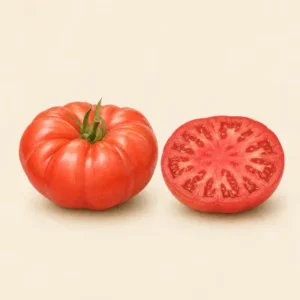
Beefmaster Tomato
A giant hybrid beefsteak: huge, meaty red slicers that often top a pound, on a tough, disease resistant, heavy yielding vine bred for size and reliability.
Flavor & performance
The honest verdict
What's great
- Enormous fruit, often a pound or more
- Meaty, dense flesh, great for slicing
- Strong disease resistance (V, F, N)
- Heavy, dependable yields for its fruit size
- Smoother, more uniform than most heirloom beefsteaks
Watch out for
- Mild flavor lacks deep heirloom complexity
- Big fruit can crack and suffer blossom end rot
- Hybrid, so saved seed will not grow true
- Heavy fruit demands very strong staking
- Needs a long warm season to size up
Grow it in your zone
| Trait | Beefmaster Tomato | Better Boy | Big Boy |
|---|---|---|---|
| Color | Red | Red | Red |
| Flavor | Mild, meaty | Rich, full | Rich, full |
| Fruit size | 12 oz to 2 lb | 10 to 16 oz | 10 to 16 oz |
| Days | 80 | 70 to 75 | 78 |
| Yield | High | High | High |
| Disease | Very good (V, F, N) | Good (V, F, N) | Fair |
| Save seeds | No | No | No |
Half the growers who try Beefmaster call it bland. The other half call it one of the best hybrids they have ever grown. The difference is whether you let the vine finish its work.
Beefmaster has a split reputation. On gardening forums, the reviews land in two camps. One camp picks the fruit at first blush, slices it, and calls the flavor flat. The other camp waits. They leave the fruit on the vine until it is fully red, heavy, and soft at the blossom end. Then they cut it open and find a sweetness and complexity that surprises them.
One Massachusetts grower described it this way. Unripe fruit tasted mediocre. Fully vine ripened fruit delivered a marvelous sweetness with a complex, fruity undertone. That same grower said Beefmaster outperformed four heirloom varieties grown in the same garden that season.
This is not a subtle difference. Beefmaster is two different tomatoes depending on when you pick it. Most of the negative reviews trace back to growers who harvest too early. The positive reviews almost always mention patience.
What the fruit is like
Beefmaster produces large, meaty beefsteak fruit. Most tomatoes weigh 1 to 1.5 pounds. Well fed plants on good soil produce individual fruit reaching 2 pounds. The shape is deep oblate with light ribbing and thick walled seed compartments.
The flesh is dense and solid. Low water content for a tomato this size. Small seed cavities. One thick slice covers a sandwich without flooding the bread. That density also makes Beefmaster useful for sauce. Less cooking time to reduce it. Less water to boil off.
The skin is firm and crack resistant. For a tomato that regularly exceeds a pound, crack resistance matters. Heavy fruit on a vine takes direct rain and sharp moisture swings all season. Beefmaster handles those conditions better than most beefsteak varieties.
The color is a deep, even red at full ripeness. No green shoulders when the fruit is left to mature completely.
Days to maturity: 80 days from transplant. That is standard for a beefsteak. Not early, not late. The indeterminate habit means the plant keeps producing new fruit from midsummer through frost. Expect the first ripe tomatoes in midsummer and a continuous supply through fall.
Why vine ripening matters on this variety
Most tomato varieties taste acceptable when picked at the breaker stage and ripened on a counter. Beefmaster does not. The flavor profile on this variety shifts dramatically in the final days on the vine.
Picked early, the flesh is firm and the flavor is flat. Mild at best. Bland at worst. Multiple growers compare early picked Beefmaster to supermarket tomatoes. That is the source of every negative flavor review.
Left on the vine until fully ripe, the sugar content climbs and the acidity balances out. The result is a mild, sweet flavor with more depth than you expect from a hybrid this large. Not as complex as a top heirloom. But clearly better than the flat fruit that early picking produces.
The practical challenge is obvious. A 1 to 2 pound tomato hanging on a vine is a target. Birds, squirrels, and insects all find it. The temptation to pick early and ripen inside is real. Resist it. The flavor payoff for waiting is large on Beefmaster. Larger than on most varieties.
How to grow Beefmaster, start to finish
Starting seeds
Start indoors 6 to 8 weeks before your last frost date. Sow seeds a quarter inch deep in a clean seed starting mix. Keep soil temperature between 70 and 80°F. A heat mat keeps germination fast and consistent.
Set up fluorescent or LED grow lights close to the canopy the day seedlings emerge. Keep them 2 to 3 inches above the plant tops. Raise them as growth continues. Beefmaster builds a vigorous vine that reaches 8 to 10 feet. A seedling that stretches toward distant light produces a weak stem. That matters when the stem has to carry fruit weighing over a pound.
Pot up to individual containers when the first true leaves appear. Feed weekly at half strength with a balanced liquid fertilizer from that point through transplant day.
Beefmaster is a hybrid. Seeds saved from the fruit do not grow true the following season. Buy fresh seed each year.
Transplanting
Move plants outside after your last frost date. Wait until nights hold reliably above 50°F. Cold nights below 54°F during flower formation cause catfacing. On a tomato that weighs over a pound, catfacing is visible and wastes a significant portion of the fruit.
Harden off over 7 to 10 days. Set plants outside for increasing periods each day before leaving them out permanently. Indoor seedlings moved directly to full outdoor sun and wind experience shock. A proper hardening period prevents that setback.
Bury two thirds of the stem at planting. Tomatoes produce roots along any buried stem section. Strip any leaves that would go below soil level. A deeper root system means better drought tolerance and more stability for a vine carrying heavy fruit through a long season.
Space plants 30 to 36 inches apart. Beefmaster builds a large canopy. Crowded plants trap humid air around the lower foliage. With no early blight resistance, adequate spacing is your cheapest defense against fungal pressure.
Soil and feeding
Rich, well drained soil loaded with compost. Target pH 6.0 to 6.8. Work a balanced organic fertilizer into the planting hole before setting the plant in. This slow release base supports root development without pushing sudden leafy growth.
Switch to a lower nitrogen tomato feed once the first flowers open. High nitrogen after flowering drives leaf growth at the expense of fruit. Feed every two weeks through the full season. Beefmaster is indeterminate and sets fruit continuously. Do not taper off feeding in late summer while the plant is still producing.
Blossom end rot is a real risk on fruit this large. Consistent moisture is the prevention. Keep soil moisture even through the season with mulch and regular watering. A compost rich soil base provides the calcium that developing fruit needs.
Light and water
Full sun, 8 hours minimum. Beefmaster needs full heat and light to ripen 1 to 2 pound fruit on schedule. One grower who reviewed Beefmaster grew it in only 4 hours of sun. The plant survived and produced, but it underperformed. Full sun is where this variety delivers.
Water deeply and consistently at the base of the plant. Target 1 to 2 inches per week. A drip line or soaker hose delivers water evenly without wetting the foliage. Overhead watering on a vine this tall soaks the canopy and invites fungal problems on a variety with no blight resistance.
Lay 2 to 3 inches of straw mulch around the plant after a deep watering. Mulch stabilizes soil moisture between waterings. It buffers temperature swings in the root zone. It also blocks soil spores from splashing onto lower leaves during rain.
Support and pruning
This is where Beefmaster demands more than most varieties. The vine reaches 8 to 10 feet. One Reimer Seeds reviewer reported the plant outgrew an 8 foot support structure and needed additional trellising. Plan for it.
Use a heavy duty cage at least 5 feet tall, or sturdy stakes with a trellis system. Set the support at planting before roots spread. A single stake is often not enough. Two stakes with horizontal ties, or a cage reinforced with a stake, handles the weight better.
Tie growing stems to the support with soft plant ties or strips of fabric. Check ties every two weeks. A vine carrying multiple fruit over a pound each puts real stress on the support structure. Retie as the plant grows.
Remove suckers below the first flower cluster. Keep the lower canopy open for airflow. Above the first cluster, let two to three main leaders develop. Aggressive pruning on Beefmaster reduces yield without improving fruit size significantly. Let the plant produce.
Strip any foliage touching the ground. Soil contact is the primary entry route for early blight spores. Keep the lowest foot of the plant clear all season.
Grower's Picks for Beefmaster
Start with the equipment you already have. These options match the plant size and uses described above; choose what fits your growing setup.
As an Amazon Associate I earn from qualifying purchases. Affiliate disclosure. Check the selected size, contents and current availability before ordering.
Garden support stakes
For training and tying upright stems. Install early and use soft ties with room for growth.
Check usable height after insertion. Larger vines may need a taller or reinforced framework.
Check options on AmazonRain Bird garden drip kit
Useful for a bed or several plants where you want watering directed to the root zone.
Check faucet, pressure and fitting requirements. Adjust watering to the soil; one pot may be easier to water by hand.
Check options on AmazonEspoma Tomato-tone
A granular feeding option when your soil or potting mix needs nutrients. Follow the label and account for existing fertilizer.
Extra fertilizer is not a cure for blossom end rot. Check moisture and soil conditions first.
Check options on AmazonEZ-Straw seeding mulch
An optional bed mulch to reduce evaporation and soil splash. Keep it away from direct contact with stems.
Check the selected product and additives. Use suitable mulch you already have instead of buying a bale for one pot.
Check options on AmazonProblems to watch
Blossom end rot. The main risk with fruit this large. A dark, sunken patch at the blossom end. Inconsistent watering is the usual cause. Mulch the soil surface. Water evenly through the season. Skip the calcium spray products and fix the moisture pattern instead. Our tomato fruit problem guide covers blossom end rot and every other common fruit symptom in detail.
Catfacing. Cool nights below 54°F during flower formation cause it. On fruit weighing over a pound, catfacing creates deep folds and scars. One Oklahoma grower reported that irregular shapes caused significant waste on Beefmaster. The fruit is safe to eat. Trim the scarred portions and use the rest. Midseason fruit from warmer nights comes in clean.
Early blight. No resistance in the package. Brown spots with concentric rings on lower leaves. Strip affected leaves immediately. Keep foliage dry when watering. Rotate beds each season. The large canopy on an 8 to 10 foot vine gives early blight plenty of surface to colonize if you ignore the first signs.
Slow ripening. Large beefsteak fruit takes time to color. Above 85°F, lycopene production slows and ripening stalls. In hot climates, midsummer fruit can sit green on the vine for weeks. Shade cloth helps in extreme heat. Patience helps more.
Hornworms. A 10 foot vine carrying large tomatoes is exactly what hornworms target. Check undersides of leaves weekly. Dark droppings on the ground below a branch are the sign. Handpick or treat with Bt at first appearance.
Support failure. This is a practical problem, not a plant disease. A standard tomato cage collapses under a Beefmaster vine loaded with fruit. Budget for heavy duty caging or a stake and trellis system from the start. Upgrading support after the plant is established damages roots.
Container growing
Beefmaster in a container is possible but not ideal. The vine reaches 8 to 10 feet. The fruit runs 1 to 2 pounds. That is a lot of plant and a lot of production to sustain in a limited root volume.
Use a 20 gallon container of quality potting mix at minimum. Set a tall stake or heavy duty cage at planting. Water daily in summer heat. Feed every 7 to 10 days because containers flush nutrients faster than ground beds. Blossom end rot risk rises because moisture consistency is harder to maintain in a pot.
For container growers who want a large slicer, there are more practical choices. Beefmaster belongs in the ground where the root system can sustain what this variety is capable of producing.
Beefmaster vs other beefsteak tomatoes
Beefsteak is the category name, not a single variety. The generic beefsteak sold at garden centers is an open pollinated variety with no coded disease resistance. Beefmaster adds VFN resistance, crack resistance, and more consistent fruit size. If you want a beefsteak with a safety net, Beefmaster is the upgrade.
Better Boy shares VFN resistance and similar flavor. Better Boy produces slightly smaller fruit in the 8 to 16 ounce range. Beefmaster goes bigger, regularly exceeding a pound. Better Boy is the better choice for consistent production of manageable slicers. Beefmaster is the choice when you want the biggest fruit your garden can produce.
Big Boy is the comparison from an earlier era. Similar fruit size. No disease resistance. In gardens with any wilt or nematode history, Beefmaster is the direct replacement. It gives you the same large beefsteak experience with VFN protection that Big Boy never offered. Our growing tomatoes guide covers the full season timing for large beefsteak varieties like Beefmaster.
The verdict
Beefmaster is a big tomato that rewards patience. Pick it early and you get flat, forgettable fruit. Let it ripen fully on the vine and the flavor transforms. That transformation is the reason half the reviews are negative and the other half are enthusiastic. The variety did not change. The harvest timing did.
The disease resistance is broader than most beefsteaks. The yields are serious. One grower pulled 126 fruit from a single plant. Another reported over 150 pounds. The vine outgrows most support structures. Plan for that.
Give it full sun, rich soil, consistent water, and a support system built for a 10 foot vine carrying heavy fruit. Strip spotted leaves early. And wait for the vine to finish ripening each tomato before you pick it. That is the Beefmaster program. The growers who follow it understand why this variety keeps selling. Our tomato fruit problem guide is there when something goes sideways.
Mississippi State University Extension: Tomato Troubles: Common Problems with Tomatoes. https://extension.msstate.edu/publications/tomato-troubles-common-problems-tomatoes
University of Maryland Extension: Catfacing Problems in Tomato. https://extension.umd.edu/resource/catfacing-problems-tomato