
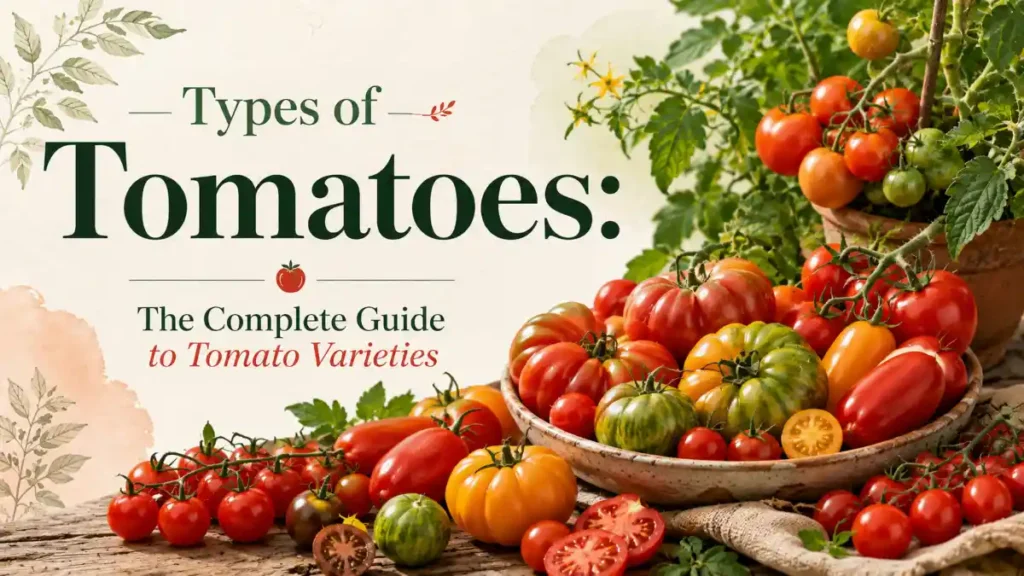
Types of tomatoes describe several different things: fruit shape, plant growth and seed history. A tomato can be a cherry, indeterminate and hybrid at the same time. Those labels answer separate questions rather than competing for one category.
Start with the fruit you want to eat, then check whether the plant fits your space and season. Breeding labels help with seed saving and identity. They do not guarantee flavor, yield or resistance.
Types of tomatoes: three labels that work together
Use three questions to read a catalog. What kind of fruit does it produce? How does the plant grow?
Is the seed a named F1 hybrid or an open pollinated selection?
Fruit categories overlap. Beefsteak describes a large fleshy style, while oxheart refers to shape. Cocktail is a market size class, and plum describes form rather than a fixed chemical or cooking specification.
Keep the full variety name after those categories. Two red, indeterminate hybrid slicers can have different maturity estimates and disease traits. The category helps narrow a search; the cultivar description makes the final choice.
Determinate vs Indeterminate Tomatoes
Determinate plants end their main growth in flower clusters and often concentrate harvests. Their final size varies. Determinate does not always mean three feet tall, maintenance free or one single picking.
Indeterminate plants continue producing new shoots and flower clusters while conditions allow. They usually need suitable support and a plan for access. They do not guarantee uninterrupted fruit set through heat or disease.
Dwarf describes compact plant architecture and is not identical to determinate. A dwarf can have continued growth. Semideterminate labels also occur, so use the complete cultivar description when designing support.
A patio can accommodate some supported indeterminate plants in appropriate containers. A garden bed can also benefit from a determinate crop. Our plant habit comparison explains the growth distinction in more detail.
Heirloom vs Hybrid Tomatoes
Open pollinated varieties can reproduce their named traits when identity and pollination are managed. Heirloom is a heritage description commonly applied within that group. A recently stabilized open pollinated selection is not automatically an old family heirloom.
An F1 hybrid is produced from a planned cross. Saved seed may germinate, but offspring can vary. That is different from saying hybrid seed is sterile or that every desirable trait disappears.
Neither label establishes a flavor winner. Named hybrids and open pollinated varieties both include excellent and disappointing fits for a particular garden. Check maturity, actual resistance and intended use instead of relying on a stereotype.
If preserving a variety matters, prioritize sound identity and seed saving practices. If a particular disease is established in the garden, compare named resistance to that pathogen. The breeding category alone cannot answer either question.
The 7 Main Types of Tomatoes
1. Cherry Tomatoes
Small, round, and dangerously snackable. Cherry tomatoes run about an inch across, ripen fast, produce like crazy, and still need suitable moisture, support and pest checks. Sweetness is their superpower: Sungold tastes like candy, and Super Sweet 100 earns its name with hundreds of fruits per plant.
If you grow one tomato in your life, make it a cherry.
2. Grape Tomatoes
The oblong little ones that fill grocery store clamshells. Grape tomatoes are firmer and meatier than cherries with thicker skins, which is why they travel well and keep longer. Less juicy burst, more satisfying chew.
Juliet is the garden favorite here, a useful elongated small fruit whose cracking tolerance is not immunity. Torn between the two little ones? The cherry vs grape comparison settles it trait by trait.
3. Cocktail Tomatoes
The in between size, roughly a golf ball, often sold still attached to the vine. Campari is the famous one, prized for balanced sweetness and acidity. Big enough to slice for a sandwich, small enough to eat whole.
Criminally underrated for home growing.
4. Plum and Paste Tomatoes
Egg shaped, dense, few seeds, low water content. These are built for cooking: they reduce into thick sauce without hours of simmering. Roma is the classic, San Marzano is the legend (the real ones grow in volcanic soil near Naples, but the variety grows fine in a backyard), and heirloom Amish Paste is meaty enough to eat fresh too.
If sauce or canning is your goal, this is your type.
5. Slicing Tomatoes
The everyday round tomato, about the size of a tennis ball, juicy with classic flavor. This is the burger tomato, the salad tomato, the BLT tomato. Reliable favorites include Celebrity, Early Girl, and Better Boy, all bred to produce heavily and resist disease.
6. Beefsteak Tomatoes
The giants. Half a pound is normal, one pound is common, and record chasers grow them past three. Dense, meaty interiors where one slice covers the whole sandwich.
Compare the named cultivar’s season and plan support for heavy fruit. A large beefsteak does not guarantee a particular flavor. Brandywine, Cherokee Purple, and Mortgage Lifter are the names to know.
7. Oxheart Tomatoes
Heart shaped selections with varied breeding histories. Oxhearts combine beefsteak size with paste tomato density, which makes them stunning for both slicing and sauce. They look wrinkled and strange and taste incredible.
Seek out German Red Strawberry or Hungarian Heart and surprise somebody.
Tomato Colors (and What They Tell You)
Tomato colors reflect several pigment and skin combinations. Traditional dusky fruit and anthocyanin shoulders can both look dark while involving different mechanisms. A green ripe variety also differs from an immature green fruit.
Color does not establish pH, sugar concentration or canning safety. A mild yellow tomato can still be acidic. Descriptions such as sweet or smoky concern perceived flavor unless backed by measurements.
Learn the normal ripe stage for the named variety. For unfamiliar dark or green fruit, compare changing color, gentle give and the first sound cut sample. A photograph alone is a weak harvest test.
How to Choose Your Tomato
Use these categories to start a short list, then check the named cultivar:
- Snacking and salads: cherry, grape, or cocktail
- Sandwiches and burgers: slicers and beefsteaks
- Sauce and canning: plum, paste, or oxheart
- Small spaces and pots: determinate and dwarf varieties
- Short or cool summers: early ripeners like Glacier and Early Girl
- Brutal heat: heat setters like Heatmaster and Phoenix
- Large heritage slicers: big heirlooms like Brandywine
Want it decided for you? Answer three questions in our Variety Finder tool and it matches you with varieties that fit your space, climate, and taste. Then check how many plants fit your bed and when to plant them.
Tomato Variety FAQ
How many types of tomatoes are there?
There is no single fixed count because fruit categories overlap. Named cultivars, seed strains and market types are different ways to count.
Does small size mean sweeter fruit?
No. Cherry types include many sweet choices, but taste depends on the cultivar and ripe fruit. Size is not a sugar measurement.
Is every dwarf tomato determinate?
No. Dwarf describes plant architecture. Check the cultivar’s growth habit separately.
Does heirloom mean better flavor?
No breeding label guarantees a taste preference. Compare sound ripe samples of named varieties.
Are all paste tomatoes suitable for the same canning process?
Use a tested process for the exact prepared product. Shape and mild flavor do not establish canning safety.
Explore the Variety Guides
Each branch of the tomato family tree has its own field guide: the cherry and grape lineup, beefsteaks and slicers, sauce and paste types, and the heirloom collection. Curious about the rainbow? What every tomato color means settles it, and if you just want a shortlist for spring, start with the best tomatoes to grow.
One more for the road: that green husked thing at the market is not a tomato at all, and tomatillo vs tomato explains why.
Where to Go from Here
Now you know the map: growth habit, seed heritage, and the seven fruit types that cover everything from currant to beefsteak.
Our variety library is being built one deep profile at a time, covering taste, growth habit, days to maturity, and disease resistance for every tomato worth growing. Meanwhile, the Variety Finder will point you to your match, and the growing section takes over from there.
Pick your tomato. Plant it well. Argue about heirlooms at dinner parties.
That is the whole hobby.
Build a short list without mixing categories
Suppose you want small fruit for daily salads and have room for one supported container. First choose the size and texture you enjoy. Then look for a plant habit and root volume you can manage.
Next compare maturity using the same starting point. A days from seed figure is not directly comparable with days from transplant. Leave some season margin rather than treating the earliest estimate as a deadline.
Finally check relevant resistance and seed saving needs. A long resistance list has little value if it does not address your diagnosed problem. An open pollinated label matters if you want to maintain that named stock.
For cooking, choose the harvest pattern as well as fruit form. A concentrated crop may suit one processing day, while a vining plant can supply smaller batches. Neither plum shape nor large size guarantees how much sauce remains after reduction.
Keep two or three candidates and compare their complete names. That is a more practical use of categories than searching for one best tomato type. Our variety finder helps apply several traits together.
Sources
University of Maryland Extension, growing tomatoes https://www.extension.umd.edu/resource/growing-tomatoes-home-garden
University of Minnesota Extension, growing tomatoes https://extension.umn.edu/garden-and-home/yard-and-garden/gardening-in-minnesota/growing-tomatoes
University of Maryland Extension, habit and breeding terminology https://www.extension.umd.edu/resource/when-plant-vegetables