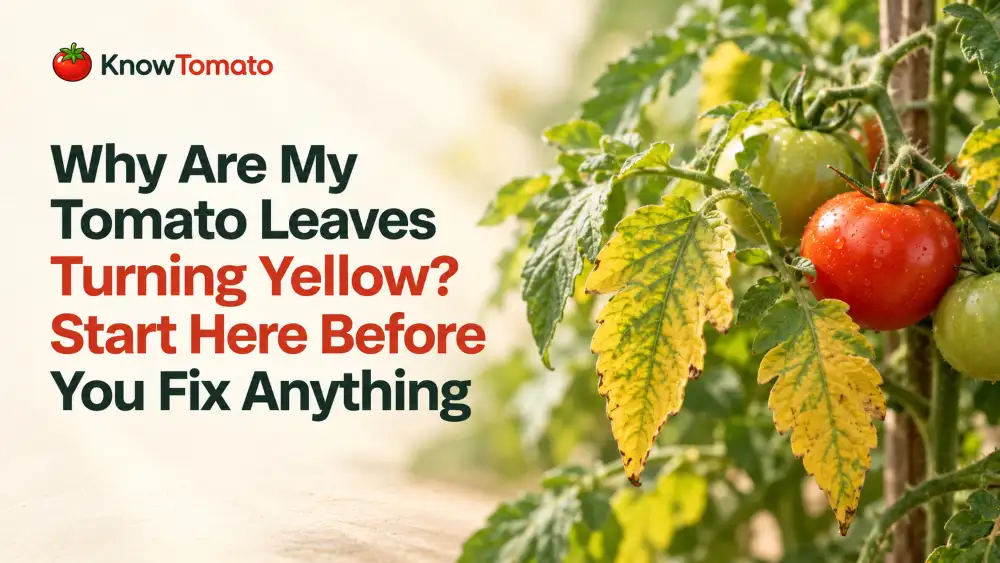
Here’s the answer most worried gardeners actually need. If the yellow leaves are the lowest ones on a big, healthy, fruiting plant, nothing is wrong.
Those leaves are old, shaded, and finished. The plant is retiring them on purpose, and every experienced grower’s advice is the same: snip them off and move on.
If that’s not your situation, keep reading. Tomato leaves turning yellow are the most overdiagnosed symptom in the hobby, and the two reflex fixes people reach for, fertilizer and epsom salt, are wrong often enough to make things worse. So before you fix anything, let’s figure out what you’re actually looking at.
First, don’t fix anything yet
The most common mistake isn’t a wrong diagnosis. It’s treating before diagnosing. And if your leaves are curling or spotted rather than yellow, start with our leaf problems guide instead.
Beginners see yellow and think hunger, then pour on fertilizer. But if the real problem is soggy roots, feeding a drowning plant compounds the injury. One veteran forum diagnosis says it perfectly: you are killing them with love, stop fertilizing.
So do one thing first. Push your finger into the soil to the second knuckle, an inch or two down. Wet soil plus yellow leaves points one direction, and dry soil points another, and that ten second test beats every guess.
The four questions that diagnose it
Extension diagnostic keys all branch on the same few observations. Answer these four and you’ve done what a master gardener would do.
Which leaves are yellow, the oldest at the bottom or the newest at the top? Is the whole leaf yellowing evenly, or is the tissue yellow while the veins stay green?
Are there spots or rings inside the yellow areas? And is it the whole plant, or just one side?
Here’s what each answer means, ranked roughly by how often each cause actually shows up in home gardens.
Bottom leaves only, plant otherwise healthy: normal aging
This is the number one cause, and it isn’t a problem. Mississippi State Extension puts it plainly: as plants mature, the bottom leaves get heavily shaded and naturally turn yellow as they age.
The plant is pulling resources out of leaves that no longer earn their keep. Remove them, since dying foliage near the soil invites disease splash, and don’t change anything else.
One warning sign changes the verdict. If the yellowing keeps climbing the plant week after week, it stopped being retirement and became a symptom. That’s the community’s escalation trigger too, and the rest of this guide takes over.
Whole plant yellowing, soil stays wet: overwatering
Among actual problems, this is the one experienced growers diagnose most. Saturated soil displaces air, and Utah State Extension describes the result directly: roots starve for oxygen and begin to die.
Dying roots can’t move water or nutrients, so the plant yellows evenly and may even wilt, which tricks people into watering more. The finger test breaks the cycle. If soil is wet an inch down, stop watering and let it dry out.
The fix going forward is deep, less frequent watering, about 1 to 1.5 inches a week per Georgia Extension guidance. Daily sprinkles keep roots shallow and soil soggy. Our watering guide covers the rhythm.
Pale all over, older leaves first: nitrogen hunger
Real nitrogen deficiency looks specific. The whole leaf fades to pale yellow green, veins included, starting with the older leaves, and the entire plant looks pale and slow.
Texas A&M horticulturists call this the most common cause of tomato leaves turning yellow in their region, because tomatoes are heavy feeders and many gardeners underfeed them. Both camps are right in context. Plants in rich garden soil rarely starve, while container plants leach nutrients out the drainage holes with every watering and genuinely run empty.
So the container rule differs from the garden rule. In pots, pale yellowing from the bottom up on a plant with fairly dry soil usually does mean feed it.
In the ground, check water and leaf position first, then feed if the pale all over pattern truly fits. Our fertilizing guide covers rates and timing.
Yellow leaf, green veins: a real deficiency, but check which end
This pattern, yellow tissue with veins staying green, is called interveinal chlorosis, and its location tells you the nutrient. On older, lower leaves, it points to magnesium.
On the newest top growth, it points to iron, which Iowa State’s diagnostic key ties to high pH, cold, and overwatered soil. Iron trouble is rare in gardens and common in overlimed or waterlogged spots.
Magnesium is the one case where epsom salt genuinely earns its reputation, and the only one. Before you reach for it, read our honest look at epsom salt, because applied without this exact symptom it can worsen other problems. The nutrient deficiency guide sorts all the lookalike patterns.
Yellow with spots: disease, starting at the bottom
Spots change everything. Yellow patches surrounding dark spots with concentric rings are the signature of early blight, and small spots with dark borders and pale centers mean septoria, both described in Clemson’s disease factsheet.
Both start on the lowest leaves and climb. Remove affected leaves into the trash, never the compost, mulch to stop soil splash, and water the soil rather than the foliage.
This guide stops here on purpose. Our tomato disease guide owns the identification photos and treatment details.
One side yellow and wilting: the serious one
If yellowing takes one side of the plant, or one side of individual leaves, while the other stays green, pay attention. Clemson describes this one sided yellowing as the calling card of fusarium wilt, and verticillium behaves similarly.
Cut a lower stem and check for brown streaking inside. These soil fungi have no cure, so remove the plant, and next year choose varieties with V and F resistance codes and plant in a different bed. It’s the least common cause on this list, and the only one worth genuine alarm.
The quick reference
A short version for anyone still panicked about tomato leaves turning yellow. Bottom leaves on a healthy plant: normal, snip and relax. Whole plant yellow with wet soil: overwatering, dry it out.
Pale all over including veins: nitrogen, feed it, especially in pots. Yellow with green veins on old leaves: magnesium. Same on new leaves: iron, check pH.
Spots inside the yellow: disease, prune and protect. One side only: wilt fungus, remove the plant.
Seedlings get one extra note. Yellowing seed leaves at the very bottom of young transplants are normal, and hardening off stress fades on its own. Overfeeding tiny plants burns roots faster than it greens leaves.
Frequently asked questions
Why are my tomato plant’s bottom leaves turning yellow?
On a healthy, growing plant, the lowest tomato leaves turning yellow are simply aging out in the shade. Remove them and don’t change your care. It only signals trouble if the yellowing keeps climbing.
Should I fertilize when I see tomato leaves turning yellow?
Not until you check the soil. If it’s wet an inch down, the problem is likely water, and fertilizer makes it worse. Feed when the whole leaf, veins included, fades pale, especially in containers.
Does epsom salt fix yellow tomato leaves?
Only when older leaves show yellow tissue with green veins, the magnesium signature. For every other pattern it does nothing or adds new problems.
Why are my tomato leaves turning yellow with brown spots?
That’s disease, usually early blight or septoria leaf spot. Remove affected leaves into the trash, mulch against soil splash, and keep water off the foliage.
Why is only one side of my tomato plant yellow?
One sided yellowing with wilting suggests fusarium or verticillium wilt, soil fungi with no cure. Check for brown streaks inside a cut stem, remove the plant, and grow resistant varieties in a new spot next year.